Table of Contents
Introduction
If you’ve ever looked at your clothes closely, you’ve probably noticed different kinds of seams. Some lie flat, others have double stitches, and a few look decorative. In German, we call all of these Nahttypen—which simply means “seam types.”
So what’s the big deal about Nahttypen?
Well, seams hold fabric together. But more than that, different seams serve different purposes. Some are flexible, others are super strong. Some are barely visible, while others are part of the design on purpose.
Whether you’re a beginner learning to sew or someone looking to improve their skills, understanding the types of seams can help you create better clothes, bags, accessories, and more. This guide will show you the most common Nahttypen, how to choose the right one, and the best ways to use them.
Let’s dive in and explore the world of Nahttypen together—one simple stitch at a time.
What Exactly Does “Nahttypen” Mean?
In English, “Nahttypen” means “types of seams.” It refers to the different ways we can sew fabric pieces together. Each seam has a name, a look, and a purpose.
Think of it like this: Glue holds paper. Seams hold fabric. But just like you wouldn’t use glitter glue on a legal form, you don’t use the same seam for every fabric.
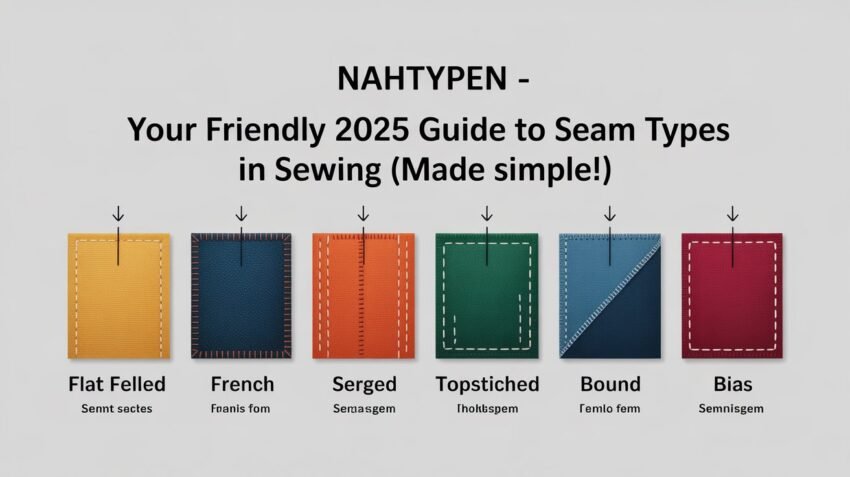
Here are some of the most well-known Nahttypen:
- Plain seam: the most common and easiest
- French seam: clean, hidden inside
- Flat-felled seam: strong and flat, like jeans
- Overlock seam: stretchy and neat
The type of seam you choose will affect the look, stretch, strength, and even feel of your final project. Once you learn the basic Nahttypen, you’ll start sewing like a pro!
Why Are There So Many Nahttypen? Simple Answer: Fabric and Function
Different fabrics act in different ways. Denim is thick and strong, while silk is thin and soft. That’s why there are so many Nahttypen—to handle all these materials properly.
Here’s a simple comparison:
- Cotton clothes? A plain seam works well.
- Stretchy leggings? You’ll want a zigzag seam or overlock seam.
- Fancy blouse? A French seam keeps it elegant and neat.
Also, not every seam is just for strength. Some seams are meant to decorate, some reduce chafing, and others help clothing last longer.
When you understand why each Nahttyp exists, you’ll pick the right one more easily—and avoid sewing mistakes.
Plain Seam – The Must-Know Nahttyp for Beginners
The plain seam (also known as straight stitch seam) is the most basic of all Nahttypen. It’s usually the first seam beginners learn—and for good reason.
How to sew it:
- Put two pieces of fabric right sides together.
- Stitch a straight line with even spacing.
- Press the seam open or to one side.
This seam is perfect for:
- Cotton clothing
- Pillowcases
- Skirts or shirts
- Quilts
It’s simple, fast, and used in almost all sewing patterns. If you’re just starting, master this Nahttyp first. You’ll use it over and over again.
Zigzag Seam – Great for Stretchy Fabric
The zigzag seam is a flexible stitch that allows fabric to move. It’s easy to sew with most machines and gives your clothes the stretch they need.
How it works:
- The stitch goes side to side like a wave or the letter Z.
Why it’s special:
- Doesn’t break when fabric stretches
- Good for finishing raw edges
- Ideal for knits, leggings, or T-shirts
You can adjust the width and length of the zigzag on your machine. A wider stitch works better for very stretchy material. If you don’t have an overlock machine, this Nahttyp is your best friend!
Overlock Seam – The Neatest of All Nahttypen
The overlock seam is used in almost every store-bought T-shirt you own. It binds the edge of the fabric while trimming at the same time. It’s done with a special machine called an overlock or serger.
Why it’s popular:
- Clean, professional look
- Stretchy and durable
- Trims off extra fabric as it sews
Perfect for:
- Sportswear
- Baby clothes
- Anything stretchy
While it requires a separate machine, the results are worth it. Overlock seams make your projects look just like they came from your favorite store.
French Seam – Beautiful Inside and Out
The French seam is great for fine or delicate fabrics. It hides the raw edges, so nothing frays, and it looks smooth on the inside.
Steps:
- Sew the fabrics wrong sides together first (yes, backward!).
- Trim the extra seam allowance.
- Flip the fabric and sew again right sides together.
Easy, right?
Use this seamless Nahttyp for:
- Silks
- Chiffon
- Baby clothes
- Dresses
It makes everything look neat—even without a lining. Perfect when you want to impress with both style and skill.
Flat-Felled Seam – Super Strong and Always Flat
Seen the thick seams on jeans? That’s the flat-felled seam. It’s one of the strongest Nahttypen.
How it works:
- One edge is folded over the other.
- Both are stitched down flat with two lines.
- No raw edge is visible.
It’s perfect for:
- Pants
- Bags
- Jackets
- Workwear
Yes, it’s a little more time-consuming, but this seam type lasts through lots of wear and washing.
Bound Seam – Add Color and Strength to Edges
A bound seam means wrapping the edge of fabric with bias tape or a fabric strip. It covers rough edges and adds a pop of color!
Why people love it:
- It looks decorative
- It protects the fabric edge
- Great for thick or heavy fabrics
Use it for:
- Inside coats or jackets
- Colorful bag linings
- Quilted projects
It’s one of the most creative Nahttypen because you can really personalize it. Fancy up your seams with bold colors or patterns!
Lapped Seam – When You Work with Thick or Special Fabrics
The lapped seam lays one layer of fabric on top of another—no folding needed! It’s easy to sew and great for non-fraying materials.
Perfect for:
- Leather
- Vinyl
- Felt
To sew:
- Place one fabric over another.
- Stitch through both layers.
- Add a second row for strength if needed.
This Nahttyp also gives a cool, visible line down your project. You’ll see it often in artistic or minimalist clothing, especially outerwear.
Double-Stitched Seam – Extra Strength Built In
Just like its name sounds, the double-stitched seam uses two rows of stitches. It makes everything stronger, without much more work.
When to use:
- Athletic wear
- School bags
- Outdoor gear
It’s like the normal plain seam—but stitched twice. So if one line breaks, the other holds everything together. Add this Nahttyp if your project needs to be tough against pulling and pressure.
Decorative Seams – Stitch for Style
Who says seams need to hide? Decorative Nahttypen are made to be seen—and admired!
They include:
- Topstitching with colored thread
- Fancy machine stitch patterns
- Bold zigzags or wave stitches
Use them when sewing:
- Collars
- Cuffs
- Pockets
- Outer seams on dresses or jackets
These seams let you express your personal style while holding your pieces together. Have fun experimenting—it’s like sewing art!
What Makes a Good Nahttyp? Let’s Compare
Choosing the right Nahttyp depends on:
- Stretch: Does the fabric need to bend or move?
- Thickness: Is it thick like denim or thin like silk?
- Style: Should the seam show or stay hidden?
- Use: Will the item be worn daily—or is it just for fun?
There’s no one-size-fits-all answer. But here’s an easy tip: If in doubt, test your seam on a fabric scrap first!
That way, you can see how it moves, holds, and looks—before sewing the full project.
FAQs
1. Can I make most Nahttypen with a regular sewing machine?
Yes! A straight stitch, zigzag, decorative, and French seams can all be done on a basic machine.
2. Do I need an overlock machine for overlock seams?
Yes and no. A real overlock machine does a better job, but you can copy the look with zigzag or stretch stitches.
3. What’s the best seam for beginners?
Start with plain seams and zigzag seams. They’re simple, flexible, and work with many fabrics.
4. Are some Nahttypen better for kids’ clothes?
Yes! Choose stretchable and soft seams like overlock or bound seams to avoid rough edges.
5. How can I know if my seam is strong enough?
Tug on your test piece. If it holds under a small pull, it’s strong. If it puckers or pops—try again.
6. Can I sew decorative seams if I’m still learning?
Yes! Start with basic straight lines in colored thread. You’ll get better each time and your pieces will look awesome.
Conclusion
Learning different Nahttypen might seem tricky at first, but it’s like learning how to use different tools in a toolbox. Each one has its own job. And when you know how to use them right, your sewing projects will look cleaner, feel stronger, and just work better overall.
Start with a few easy seam types. As you sew more, try new ones. Mix and match based on your fabric and the look you want. Every seam you sew brings you one step closer to sewing like a pro.